What VALORANT Champions Shanghai group stage Day 7 delivered in the 2026 title race
You can order the same kind of articles for your own video to boost it on YouTube and Google. Just message the Telegram bot @sat_sit_bot. Articles with your video embedded are written and posted by the bot itself — on popular topical sites (no ads). Your first 50 articles are free.
· based on the channel VALORANT Champions Tour
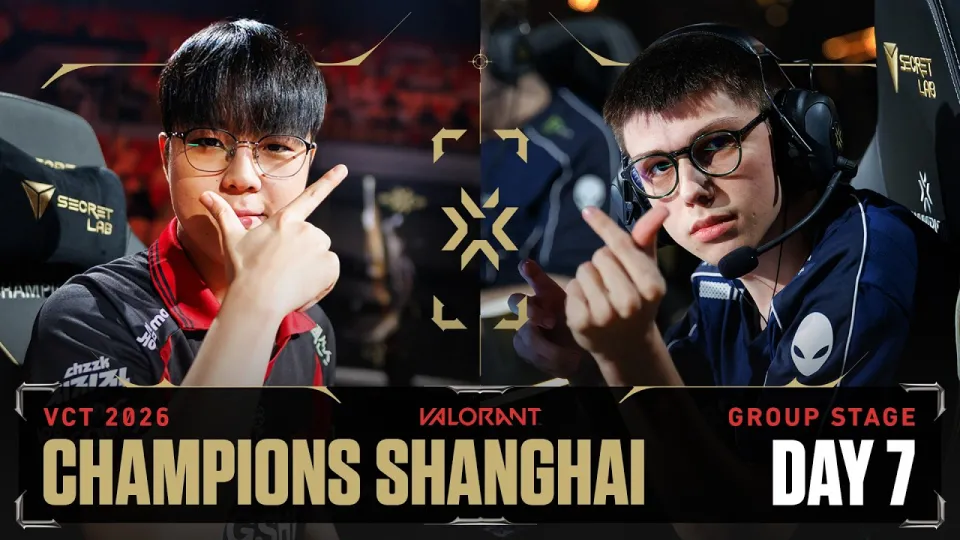
VALORANT Champions Shanghai is the 2026 world championship, and its group stage Day 7 is the seventh broadcast day of the tournament, streamed by the VALORANT Champions Tour channel as sixteen teams from Americas, CN, EMEA and Pacific fight for the year's biggest trophy. The event runs from September 24 to October 18, so Day 7 sits in the middle of the group phase, when playoff seeding starts to take shape. For schedules, results and bracket updates, the official feed at VALORANT Esports on X is the fastest source.
What the group stage format means for VALORANT Champions Shanghai
The group stage is the filter that turns sixteen regional qualifiers into a playoff bracket, and every Day 7 match changes who avoids the tougher side of it. The official event description frames the tournament as a collision of eras: familiar names, new contenders and a fearless generation of challengers, all in a city where history and the future live side by side. Two Masters events in 2026 already produced two different champions, which is why the group stage feels less like a formality and more like an audition for the title.
Sixteen teams across four regions means the group stage is also a regional argument. Americas, CN, EMEA and Pacific each bring their own meta read, their own pace and their own map pools, and by Day 7 those styles have usually been tested against each other enough to separate the genuinely adaptable teams from the ones riding a single comfort pick.
Reading Day 7 through the broadcast and the chat
Day 7 is best understood as a long broadcast day where match quality and production issues compete for attention. The most-liked comment under the stream is a spoiler blocker with timestamps, which tells you a lot about how people actually watch VODs of VALORANT esports: they want the results hidden until they reach the map they care about. The second most-liked thread is a complaint about an endless series of tech pauses, and several smaller comments repeat the question of why there were so many pauses in the first place.
That is a real part of the viewing experience, not a footnote. A group stage day runs for hours, and every pause stretches the gap between maps, cools momentum and pushes viewers toward the timestamp list. If you plan to watch the Day 7 VOD, the practical approach is simple:
- Open the stream and jump straight to the spoiler-blocked timestamps instead of scrubbing.
- Expect at least one technical stoppage per long broadcast block and budget time for it.
- Watch the map you care about first, then go back for the desk analysis.
Why CN teams drew the harshest criticism on Day 7
The sharpest criticism in the comments targeted the CN representatives, and it was specific rather than generic. Viewers pointed to lost eco rounds, blown 5v2 situations and utility usage that looked mechanical once set strategies broke down. One widely liked comment argued that stronger teams in other regions missed the event entirely, which is the classic group stage argument about regional depth and qualification paths.
Strip away the emotion and the technical point stands: at this level, rounds are lost in the small decisions. An eco round conceded because of a slow rotate, a 5v2 thrown because three players peek one angle, a post-plant setup that reuses the same utility pattern every time. Group stage Day 7 is exactly where those habits get punished, because the opponents have had six days of film on everyone.
The small moments that carried Day 7
Not everything on Day 7 was a macro debate; some of it was just VALORANT being VALORANT. One commenter flagged a moment deep into the broadcast where a Yoru clone briefly looked like it was helping hold a site, the kind of split-second misread that only happens in a game with this many decoys and fake-outs. Another timestamp got a short laughing reaction, and a handful of viewers threw support behind individual players rather than teams.
Those moments matter for the same reason the scoreline does: they show how much of a VALORANT match is information warfare. Clones, smokes, fake rotations and utility dumps are all attempts to make the opponent believe something false for two seconds. When a pro team misreads it, the clip travels. When a viewer misreads it, it becomes a comment thread.
What to watch as the group stage closes
With the group stage past its midpoint, three things decide who enters the playoffs with momentum. First, map pool depth: teams that can only win on two maps get banned out immediately in a bracket. Second, pistol and eco discipline, the exact area viewers criticized on Day 7, because those rounds are the cheapest points on the board. Third, composure under production delays, since a long pause can flip the rhythm of a team that was rolling.
The event description promises exactly the kind of finish the 2026 season has set up: new contenders who have already broken expectations at Masters, familiar names trying to reclaim the year, and a fearless generation with nothing to lose. Day 7 is where that story stops being a preview and starts being a bracket.
Common questions from the Day 7 audience
Viewers watching the stream asked a few recurring things, and they are worth answering directly. The tech pauses were the loudest complaint, and the honest answer is that long broadcast days with server, hardware or player-side issues produce stoppages that the production team resolves off-camera; the timestamp lists exist partly because of them. The regional depth argument is also fair to raise: qualification paths differ by region, so the sixteen teams in Shanghai are not a perfect ranking of the world's best. And the CN criticism should be read as round-level analysis, not a verdict on a whole scene, because the same viewers praising individual players in the same thread are watching those rounds closely.
Useful links
- Official X account: https://x.com/valorantesports
- Facebook: https://www.facebook.com/ValorantEsports/
- Instagram: https://www.instagram.com/valorantesports/
- TikTok: https://www.tiktok.com/@valorantesports
- Twitch: https://www.twitch.tv/valorant
Bottom line on VALORANT Champions Shanghai group stage Day 7
Day 7 of VALORANT Champions Shanghai is a group stage broadcast where playoff seeding, regional arguments and production frustration all land in the same chat. The 2026 season has already delivered two different Masters champions, and the group stage is where the next challenger either proves it or gets exposed. The VALORANT Champions Tour channel is the author of this broadcast and the place to follow the rest of the run. Follow @valorantesports on X for schedules, results and bracket updates before the playoffs begin.
Key takeaways
- VALORANT Champions Shanghai runs September 24 to October 18, with 16 teams from Americas, CN, EMEA and Pacific.
- Day 7 of the group stage is the seventh broadcast day of the event, streamed by the VALORANT Champions Tour channel.
- Two Masters events in 2026 produced two different champions before Shanghai, per the official event description.
- Viewer comments on Day 7 focused on repeated tech pauses, CN teams losing eco and 5v2 rounds, and utility usage.
- The official X account at https://x.com/valorantesports carries schedules, results and bracket updates.
Source: VALORANT Champions Shanghai — Group Stage — Day 7 · Markdown version
Questions & answers
What is VALORANT Champions Shanghai group stage Day 7?
It is the seventh broadcast day of the group stage at the 2026 VALORANT world championship in Shanghai, streamed by the VALORANT Champions Tour channel. Sixteen teams from Americas, CN, EMEA and Pacific compete in the group phase before the playoff bracket. The event runs from September 24 to October 18.
Why were there so many tech pauses during the Day 7 stream?
Long broadcast days at international events regularly hit server, hardware or player-side issues that have to be resolved before a map can continue. Viewers noticed the volume of pauses and asked about them repeatedly in the comments. The timestamp lists shared under the stream exist partly to help people skip those gaps.
Are the CN teams really the weakest region at the event?
That claim came from viewers reacting to specific rounds, such as lost eco rounds and blown 5v2 situations, rather than from a full statistical review. Regional qualification paths differ, so the sixteen teams in Shanghai are not a perfect global ranking. Treat the criticism as round-level analysis, not a verdict on an entire scene.
How should I watch the Day 7 VOD without spoilers?
Use the timestamp list shared in the comments, which is designed to let you jump to a specific map without seeing results first. Watch the map you care about, then return for the desk segments. Budget extra time for technical stoppages in the broadcast.